by MmpApps
Total Subscribers:
Description
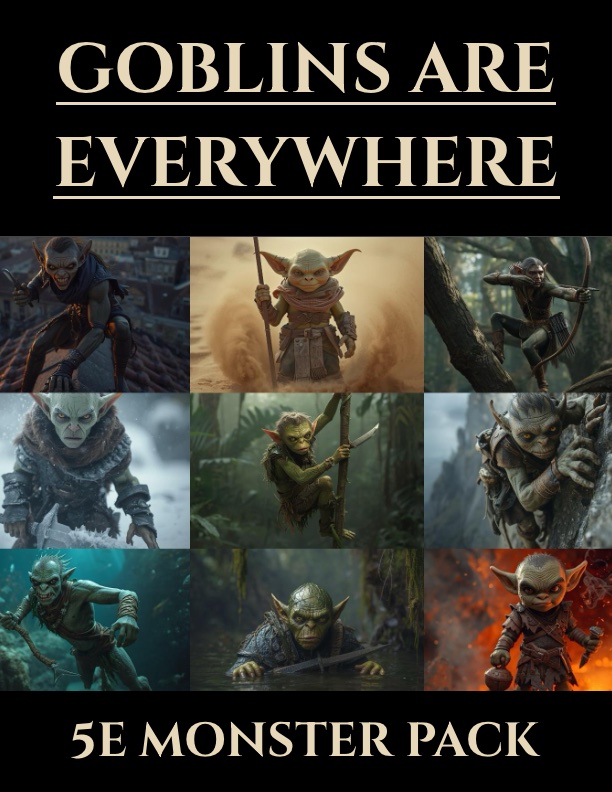
Goblins are Everywhere
We present goblins adapted to nine environments: Ice, City, Mountain, Swamp, Volcanic, Desert, Forest, Jungle, and Sea.
Goblins Are Everywhere is a monster supplement for 5e that presents goblins not as a single disposable low-level nuisance, but as a species defined by relentless adaptation. Instead of escalating into high-CR warlords or legendary tyrants, this book keeps goblins within their natural ceiling and explores how they thrive in radically different terrain.
These are not alternate ancestries. They are alternate habitats.
The intent of this product is environmental identity and encounter variety. Each biome presents three goblins—CR 1/8, 1/4, and 1/2—whose abilities reflect survival strategies shaped by climate, geography, and opportunity. Their strength does not lie in raw power. It lies in numbers, positioning, and terrain mastery.
Goblins rarely rule themselves. Where organization rises above petty gangs or tribal clusters, leadership often comes from hobgoblins, bugbears, or other stronger goblinoids. This book focuses on the rank-and-file survivors—the ones who infest every corner of the world.
Jurisdictions, history, and alignment nuances are intentionally undefined. Ice goblins may haunt glacial passes, desert goblins may trail caravans, city goblins may infest sewer systems beneath proud capitals. They are not organized empires. They are opportunists.
Goblins do not conquer worlds, they infest them.
How dangerous they become depends entirely on how prepared the party is to fight where the goblins are strongest.
Ice Goblins
“The snow hides us. The cold keeps us.”
Ice goblins survive where most small folk would perish. They dwell in frozen caves, glacier crevices, and wind-scoured tundra settlements. Their gear is scavenged, their blades brittle, their shelters temporary.
They are not immune to the cold. They endure it.
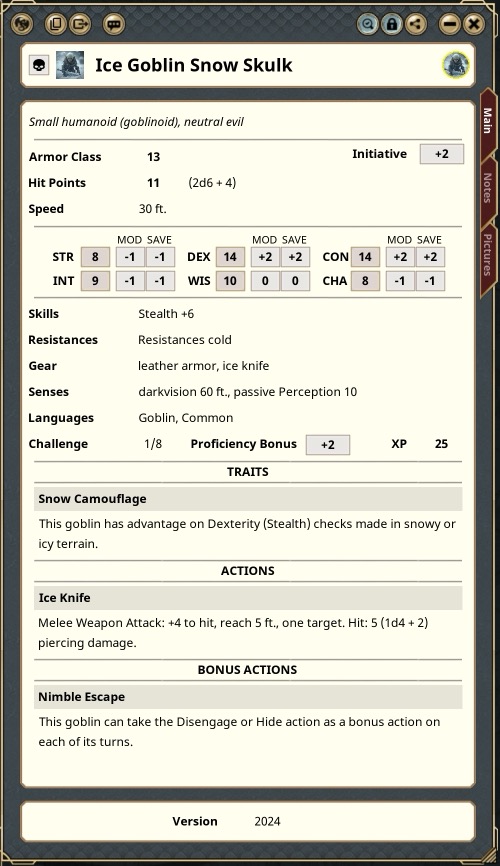
They fight in low visibility, in blowing snow, and across treacherous ground where a single misstep can send a larger foe sprawling. Ice goblins do not seek prolonged combat—they strike, withdraw into whiteout conditions, and let exhaustion do the rest.
Ice goblins are designed for:
- Ambush encounters during blizzards
- Glacier pass chokepoints
- Ice-slick battlefield control
- Survival-horror style wilderness travel
They are small shapes in a vast white expanse.
They are never where you expect them to be.
City Goblins
“Under your streets. Over your roofs. Behind your walls.”
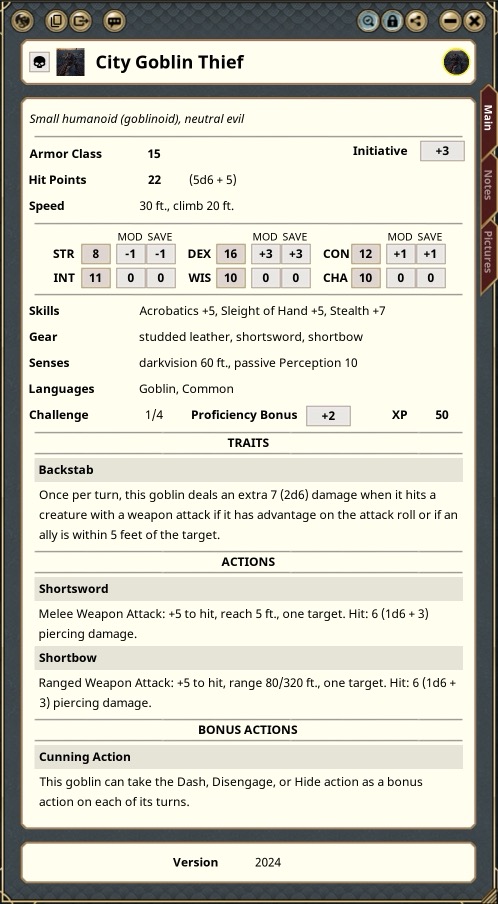
City goblins thrive in the cracks of civilization. Sewers, abandoned cellars, collapsed tenements, drainage systems, scaffolds, and rooftops form their territory. They are not kings of the underworld—they are parasites within it.
They adapt quickly to urban structure. They know the blind alleys, the forgotten tunnels, the rooftops no guard patrols. They do not hold cities. They infest them.
City goblins are organized in loose gangs rather than tribes. Loyalty is practical and temporary. Theft, sabotage, protection rackets, and opportunistic violence sustain them.
City goblins are designed for:
- Rooftop chases
- Sewer ambushes
- Urban infiltration missions
- Low-level criminal intrigue
They are rarely seen in daylight.
But they are always watching.
Mountain Goblins
“Climb if you dare.”
Mountain goblins claim cliff faces, high passes, and broken ridgelines. Their settlements cling to stone outcroppings and narrow goat paths. Larger creatures struggle in such terrain. Goblins excel.
They use elevation as a weapon. Sling stones from above. Rolling debris. Sudden drops. They rarely fight on flat ground by choice.
Mountain goblins are designed for:
- Cliffside ambushes
- Rockslide hazards
- High-ground tactical fights
- Narrow-path defensive stands
Gravity is their ally.
Swamp Goblins
“The mud keeps what it takes.”
Swamp goblins root themselves in marshland others avoid. Reed huts, mud burrows, and half-submerged platforms form hidden settlements. They move through knee-deep water as easily as others walk a road.
They weaponize the environment—nets, concealed pits, disease-coated blades, fog banks, and sucking mud.
Swamp goblins are designed for:
- Difficult terrain encounters
- Ambush-heavy wilderness sessions
- Poison and restraint tactics
- Fog-shrouded retreats
The swamp is not difficult terrain to them. It is home.
Volcanic Goblins
“Ash falls. We remain.”
Volcanic goblins inhabit ash fields, lava tubes, and smoke-choked slopes. Their gear is obsidian-edged, their settlements built from blackened stone.
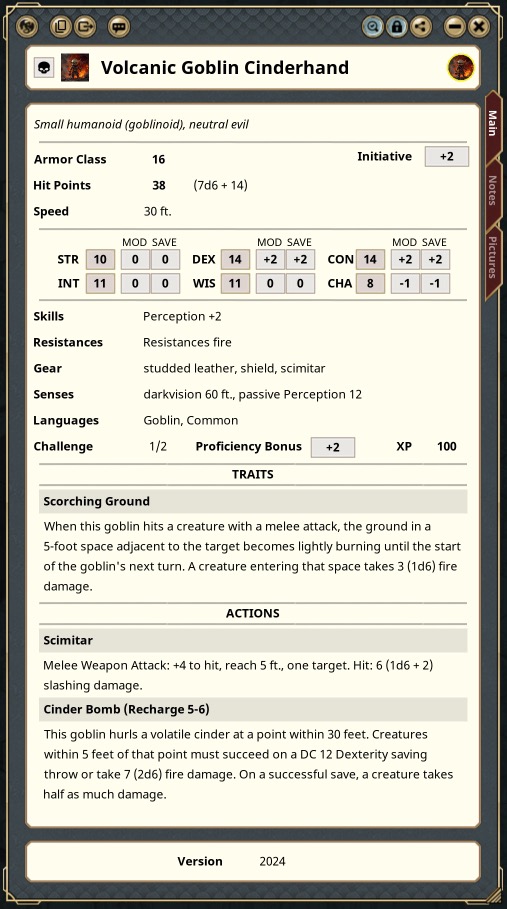
They fight in heat haze and drifting smoke. Fire is a tool, not a spectacle.
Volcanic goblins are designed for:
- Area denial encounters
- Smoke-obscured battlefields
- Lava-adjacent terrain hazards
- Brutal, aggressive skirmishes
They do not fear heat.
They fear nothing that burns slowly.
Desert Goblins
“The sun is not our enemy.”
Desert goblins survive in dunes, scrublands, and dry canyons. They travel light, strike fast, and disappear into sand and wind.
They avoid prolonged engagements, relying instead on hit-and-run tactics and sandstorm cover.
Desert goblins are designed for:
- Caravan harassment
- Open-terrain mobility fights
- Sand-obscured ambushes
- Heat-exhaustion pressure scenarios
The desert kills the unprepared. They are not unprepared.
Forest Goblins
“The trees speak first.”
Forest goblins blend into undergrowth and canopy. They favor poison thorns, concealed pits, and layered ambushes.
They strike from concealment, often in the first moments of an encounter.
Forest goblins are designed for:
- Dense terrain ambushes
- Poison-based tactics
- Multi-layered battlefield traps
- First-round burst damage
You rarely see the forest goblin first.
Jungle Goblins
“Up there. Always up there.”
Jungle goblins move through vines and canopy with unsettling ease. They use elevation, foliage density, and venomous fauna to their advantage.
They attack from above and vanish intaso green shadow.
Jungle goblins are designed for:
- Vertical battlefields
- Blowgun poison encounters
- Canopy-based repositioning
- Multi-angle ambush tactics
The jungle is loud. Their approach is not.
Sea Goblins
“The tide brings us.”
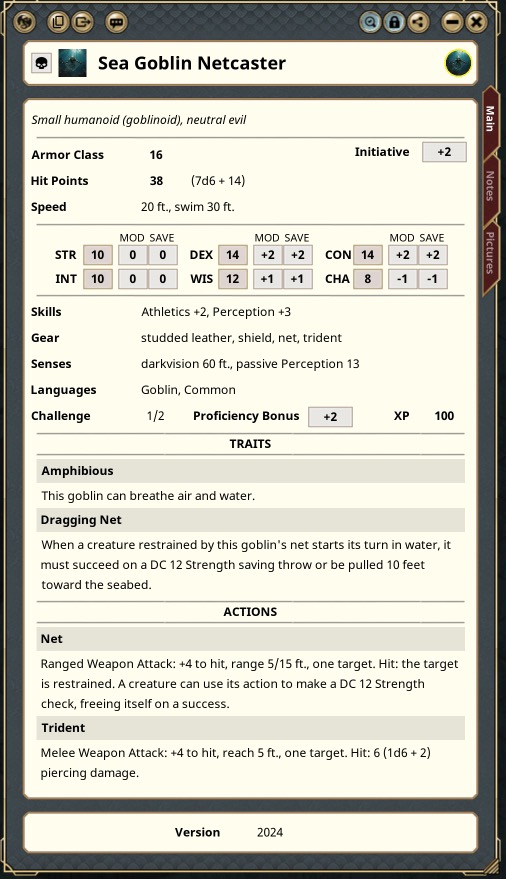
Sea goblins dwell along reefs, tidal caves, mangrove coasts, and hidden coves. They are not deep-ocean rulers—they are shoreline opportunists and reef-dwellers who survive by controlling shallows and submerged passages.
They strike from water, drag prey below the surface, and vanish into submerged tunnels before retaliation arrives.
Sea goblins are designed for:
- Dockside raids
- Coastal ambushes
- Water-drag mechanics
- Tide-based repositioning fights
When the tide rises, so do they.
Ice Goblins
Ice Goblin Snow Skulk (CR 1/8): Light-footed ambusher who blends into snowfall and white terrain, striking before vanishing into flurries.
Ice Goblin Iceblade (CR 1/4): Frost-bitten skirmisher whose chilled strikes slow fleeing enemies across slick ground.
Ice Goblin Frost Trapper (CR 1/2): Battlefield controller who prepares icy patches, brittle bridges, and snow-laden hazards.
City Goblins
City Goblin Alley Skulk (CR 1/8): Urban lookout who disappears into alleys, scaffolds, and drainage tunnels.
City Goblin Thief (CR 1/4): Agile cutpurse and rooftop runner specializing in ambush strikes and quick escapes.
City Goblin Saboteur (CR 1/2): Arsonist and infrastructure-wrecker who weaponizes oil, scaffolds, and sewer hazards.
Mountain Goblins
Mountain Goblin Cliff Skitterer (CR 1/8): Climbing specialist who uses height and narrow ledges to harass larger foes.
Mountain Goblin Slingfighter (CR 1/4): High-ground ranged combatant who rains stones from above.
Mountain Goblin Rockbreaker (CR 1/2): Terrain manipulator who triggers small rockslides and destabilizes footing.
Swamp Goblins
Swamp Goblin Mire Skulker (CR 1/8): Mud-concealed ambusher who strikes from shallow water and reed cover.
Swamp Goblin Netter (CR 1/4): Restraining skirmisher who entangles enemies in muck and difficult terrain.
Swamp Goblin Rotcaller (CR 1/2): Poison-wielding controller who weakens foes before fading into fog.
Volcanic Goblins
Volcanic Goblin Ash Skulk (CR 1/8): Smoke-blurred ambusher who thrives in drifting ash and low visibility.
Volcanic Goblin Obsidian Cutter (CR 1/4): Brutal melee fighter wielding razor-sharp volcanic glass blades.
Volcanic Goblin Cinderhand (CR 1/2): Fire-flinging skirmisher who creates burning zones and heat pressure.
Desert Goblins
Desert Goblin Sand Skitter (CR 1/8): Elusive ambusher who uses dunes and shifting sand for concealment.
Desert Goblin Raider (CR 1/4): Hit-and-run attacker who strikes caravans and retreats into open terrain.
Desert Goblin Dustcaller (CR 1/2): Battlefield obscurer who creates sandbursts to disrupt vision and formation.
Forest Goblins
Forest Goblin Thorn Skulk (CR 1/8): Poison-pricking ambusher hidden among undergrowth and brambles.
Forest Goblin Archer (CR 1/4): Foliage-concealed ranged attacker who strikes from partial cover.
Forest Goblin Vine Snarer (CR 1/2): Controller who restrains targets with entangling growth and hidden lines.
Jungle Goblins
Jungle Goblin Canopy Skulk (CR 1/8): Vine-swinging scout who attacks from above before repositioning.
Jungle Goblin Dart Hunter (CR 1/4): Blowgun specialist using venom-coated darts in dense foliage.
Jungle Goblin Beastkeeper (CR 1/2): Skirmisher who coordinates minor jungle fauna to disrupt enemies.
Sea Goblins
Sea Goblin Reef Clinger (CR 1/8): Aquatic ambusher who clings to coral and rocky seabeds before striking.
Sea Goblin Harpoon Raider (CR 1/4): Piercing attacker who drags enemies beneath the surface.
Sea Goblin Netcaster (CR 1/2): Water-control specialist who entangles foes and pulls them deeper into the tide.
PREVIEW
For a preview download: Preview PDF
UUID 94256286-38eb-11f1-a411-0050562be458

